

Sugilite wasn’t stolen – NPA
 Nation Reporter
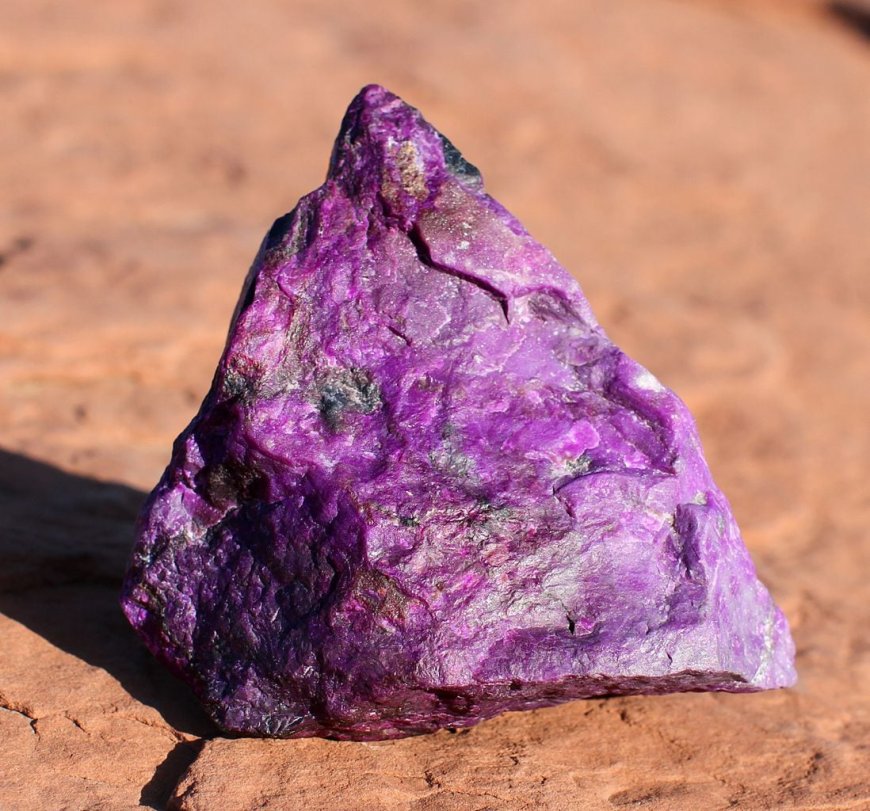
Sugilite wasn’t stolen – NPA
Content Type: Free
By NATION REPORTER
THE 23 tonnes of sugilite at the centre of Zambia’s high-profile Luapula mining scandal, once estimated by Nkana Member of Parliament Binwell Mpundu to be worth over US$50 million, were lawfully returned to a Syrian-owned construction company whose registered business activities do not include mining, the National Prosecution Authority (NPA) has confirmed.
According to NPA public relations manager Vivien Nsingo, the rare purple mineral was released to Bayani Mines after the conclusion of criminal proceedings in which ownership was conclusively established.
“At the close of the trial, and pursuant to the applicable rules of practice and procedure, the State applied for the sugilite to be released to its lawful owner, as no dispute regarding ownership had been established,” Ms Nsingo said.
However, official records from the Patents and Companies Registration Agency (PACRA) show that the company in question — Bayan Construction Limited — is registered as a construction firm, not a mining entity. Incorporated on 28 April 2020 with registration number 120200003152, the company’s registered office is at 255/D, off Los Angeles Road, Makeni, Lusaka. Its authorised share capital is K15,000, divided into 15,000 ordinary shares.
The company is wholly owned by three Syrian nationals: Faraj Alhadhoud (42.5 per cent), Taha Taha (42.5 per cent) and Ahmed Taha (15 per cent). Faraj Alhadhoud and Taha Taha are also directors, with Taha Taha listed as company secretary. The PACRA record identifies the same three individuals as the beneficial owners.
The company is registered to undertake construction of buildings, roads, railways, utility projects and other civil engineering works. Notably, the PACRA printout issued on 13 July 2026 does not list mining, mineral exploration or mineral processing among its registered business activities.
The sugilite saga has sparked fierce political debate. In July 2026, opposition MP Binwell Mpundu claimed that three impounded truckloads of sugilite — which he valued at an astronomical US$750 million — had gone missing from police custody.
The Ministry of Mines and Minerals Development formally refuted those claims, with Permanent Secretary Dr. Hapenga Kabeta clarifying that the impounded minerals remained safely in the state’s legal custody.
When the illegal mining scandal first broke at the Muombe site in Luapula Province, media rumours valued the seized gemstone caches at US$30 million. The Ministry of Mines later confirmed the local “pocket” deposit had been entirely depleted.
The NPA explained that after the mineral was seized, it was kept under lock and key at Mansa Police Station. Because of the sheer size of the exhibit — 23 tonnes — transporting it to court was impossible, forcing the court to relocate to Mansa Police Station for inspection. “The Court convened at the police station, where the container housing the sugilite was opened, the contents were observed, and the mineral was formally produced before Court as an exhibit,” Ms Nsingo said.
Judgment was delivered on 24 July 2025, resulting in the conviction of former Nchelenge District Commissioner Robert Mutepuka, former Mwansabombwe District Commissioner Morton Sikazwe, several police officers and their associates.
Last week, Green Party president Peter Sinkamba challenged Government to account for the whereabouts of the confiscated sugilite, arguing that the issue remained one of the biggest unresolved questions in Zambia’s mining sector.