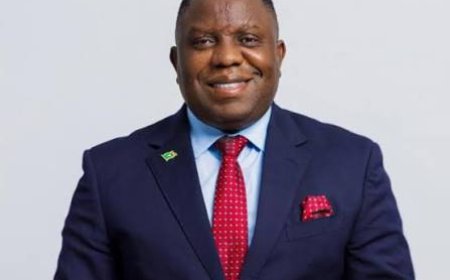

Kalaba promises to reform mining sector
 Nation Reporter

Kalaba promises to reform mining sector
Content Type: Free
By BARNABAS ZULU
HARRY Kalaba says the Citizens First (CF) will reform the mining sector to ensure the country earns a fairer share from its natural resources, arguing that improved management of the sector will help reduce its dependence on borrowing.
Mr Kalaba, presidential candidate of the CF Orange Alliance says the debt situation had become one of the country’s biggest economic challenges, but stressed that debt itself was not the problem.
He said every country borrows, but the real challenge arises when borrowing is not accompanied by the creation of enough wealth to repay the loans.
“Zambia has been relying too heavily on the copper industry for many years while receiving far less than it should from its natural wealth,” Mr Kalaba said.
He attributed the situation to poor policy decisions and inconsistent economic planning, which he said had forced the country to continue borrowing money to finance budget shortfalls.
Mr Kalaba said a Citizens First government would ensure that every kwacha borrowed had a clear purpose, a well-defined investment plan and a clear repayment strategy.
He said the party would reform the mining sector so that the country could finally receive a fairer return from its mineral resources.
Mr Kalaba said this would include considering the reintroduction of a Windfall Tax so that when global copper prices rise and mining companies make extraordinary profits, Zambia would also benefit.
He said the additional revenue generated could be used to reduce borrowing, improve public services and help pay down the national debt.
Mr Kalaba noted that the proposal was not a radical idea, saying several African countries had successfully implemented policies that enabled them to benefit more from their natural resources.
He cited Botswana as an example, saying the country negotiated stronger returns from its diamond industry and invested the proceeds in education, healthcare, road infrastructure and long-term national development.
Ends.